Twenty three years of work across the region, from skilling programmes delivered in the Garo Hills to four integrated production clusters now under setup in Assam and Nagaland. Our regional headquarters is at Six Mile, Guwahati.
Why the North East
The region holds bamboo, water, forest cover, aromatic crop potential, strong artisan traditions and strong community institutions. What the region lacks is the middle layer between the maker and the buyer. Processing sits outside the region, quality records are thin, feed and seed travel long distances, and the household sells raw material at the lowest point of the chain.
SLRD builds the missing middle inside the cluster. A skill base, a processing unit, an institution owning the unit, cultivation and plantation feeding the unit, and a market and record system selling from the unit. Bamboo and aromatic grasses are grown on ground presently lying idle or degraded, which puts income and land recovery on the same acre.
Meghalaya
Five districts. The only state where completed work and current work sit side by side.
Programmes have been delivered for the Government of Meghalaya, the Asian Development Bank, the Meghalaya State Skills Development Society and border area development agencies across the Garo Hills and the Khasi Hills. Current work runs through Ri Bhoi, with four producer institutions: the Western Ri-Bhoi Farmers Producer Cooperative Society at Patharkhmah, the Marngar Cluster Farmers Producer Multipurpose Cooperative Society at Umling Block, the Thad Multipurpose Cooperative Society at Thad village, and Iaikyrshan.
Where we work in Meghalaya
| Area | District | Institution or partner | What is happening there | Status |
|---|---|---|---|---|
| Jirang Block | Ri Bhoi | Western Ri-Bhoi FPCS | Agroforestry nursery on one acre for around 150,000 seedlings a year. Fruit and herbs dehydration unit rated at 1,000 kg of fresh produce a day. | In development |
| Jirang Block | Ri Bhoi | Department of Fisheries with Global Association of MSMEs and Living Roots Network | Fisheries cluster covering 993 farmers across 135 hectares of ponds. | In development |
| Patharkhmah | Ri Bhoi | Western Ri-Bhoi FPCS, registered 2020, 525 members | The partner institution for the nursery and dehydration unit. Permaculture workshop for 32 farmers. | Operational |
| Madanheh, Marngar, Umling Block | Ri Bhoi | Marngar Cluster FPMCS | Solar installation moving a farmer enterprise to solar powered processing. MSME ecosystem training. Produce aggregation workshops. | Operational |
| Thad village | Ri Bhoi | Thad Multipurpose Cooperative Society | Permaculture workshops for more than 30 farmers, and a two day programme for 27 farmers with ATMA. Solar equipment under the Small Grants Programme. | Operational |
| Mynnar village | Ri Bhoi | Western Ri-Bhoi FPCS with ATMA | Two day practical permaculture workshop. | Completed |
| Umiam | Ri Bhoi | ICAR-KVK Umiam and ICAR-NEH | Crop diversification and integrated farming workshops. Vermicompost workshops for women farmers. | Completed |
| Ampati and Hatisil village | South West Garo Hills | Government of Meghalaya | Apparel manufacturing and training. Plastic waste recycling unit set up in 2019, operated by a village committee. Cloth bag distribution under the Chief Minister’s Plastic Challenge. | Completed and running |
| Purasinga, Kumligaon and Joyfar | South West Garo Hills | Government of Meghalaya, BADP | Jacquard loom skilling and a fully equipped handloom weaving facility centre. | Completed |
| District wide | South West, West and South Garo Hills | Government of Meghalaya | Solar photovoltaic skilling. Off-grid solar system at a village school in West Garo Hills. | Completed |
| Shillong | East Khasi Hills | SLRD, Global Association of MSMEs and Meghalaya Rural Bank | Apparel training facility. Residential bamboo handicraft programme. Agreement with Meghalaya Rural Bank on bankable rural enterprises. | Completed and continuing |
| Seven locations | Multiple districts | Asian Development Bank with MSSDS | Indigenous handicraft and pottery development in cane, wood carving, stone carving, pottery and traditional black pottery. | Completed |
Completed programmes
Eight programmes, 2,720 people trained and placed into work or enterprise, alongside 10,000 more under Mission Organic Meghalaya. Each was delivered for a named funder, and each is listed with the funder because the funder is what makes the record checkable.
| Programme | Funder | People | What was delivered |
|---|---|---|---|
| Apparel and zardozi skill development | Government of Meghalaya | 1,200 | Apparel manufacturing and training facilities in South West Garo Hills and Shillong. Training in sewing, garment construction and pattern making. Peak capacity of around 20,000 garments a month and 200 youth trained a month. A facility near Ampati created direct work for more than 1,000 people from Hatisil and neighbouring villages. |
| Herbal cosmetics and SHG enterprise | Border Area Development Organisation | 410 | Self Help Groups, mainly rural women, trained in herbal cosmetics, personal care products and toiletries from local herbs, with handholding to establish small production units. |
| Solar PV skilling and rural service network | Government of Meghalaya | 360 | Youth across three Garo Hills districts trained to assemble, install, maintain and service solar systems, building a technician network where after sales service had been absent. An off-grid system installed at a village school. Appointment followed as a Project Management Unit by the Power Department. |
| Rural souvenir and handicraft development | Government of Meghalaya | 320 | Souvenir and handicraft enterprises developed around potential rural growth centres, strengthening local production and enterprise capacity. |
| Indigenous handicraft and pottery | Asian Development Bank with MSSDS | 250 | Intensive training from master artisans in native cane work, wood carving, stone carving, pottery and traditional black pottery, with design improvement, product development and market linkage. |
| Bamboo handicraft upskilling | Border Area Development Organisation | 80 | Residential programme at the SLRD training facility in Shillong covering improved bamboo processing, contemporary product design, low cost tools and machinery, productivity and market readiness. |
| Jacquard loom and handloom development | Government of Meghalaya, BADP | 50 | A fully equipped handloom weaving facility centre at Purasinga, Kumligaon and Joyfar, with training in advanced Jacquard technique, combining traditional Garo motifs with contemporary weaving. |
| Plastic recycling and circular economy | Government of Meghalaya | 50 | Small scale recycling units established, with training in waste segregation and processing, recycling and upcycling of plastic, and community awareness. |
Cloth bags and the plastic recycling unit
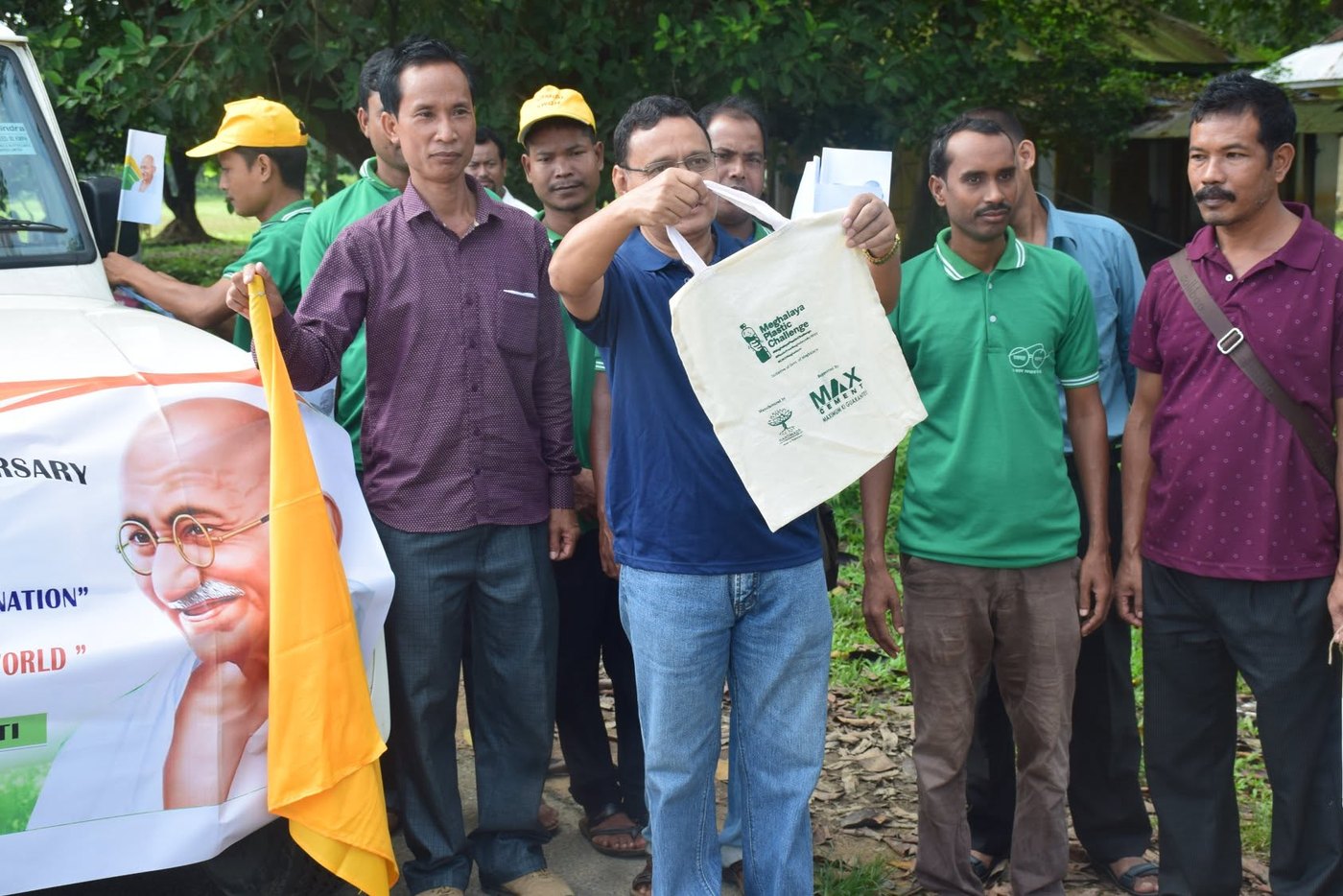
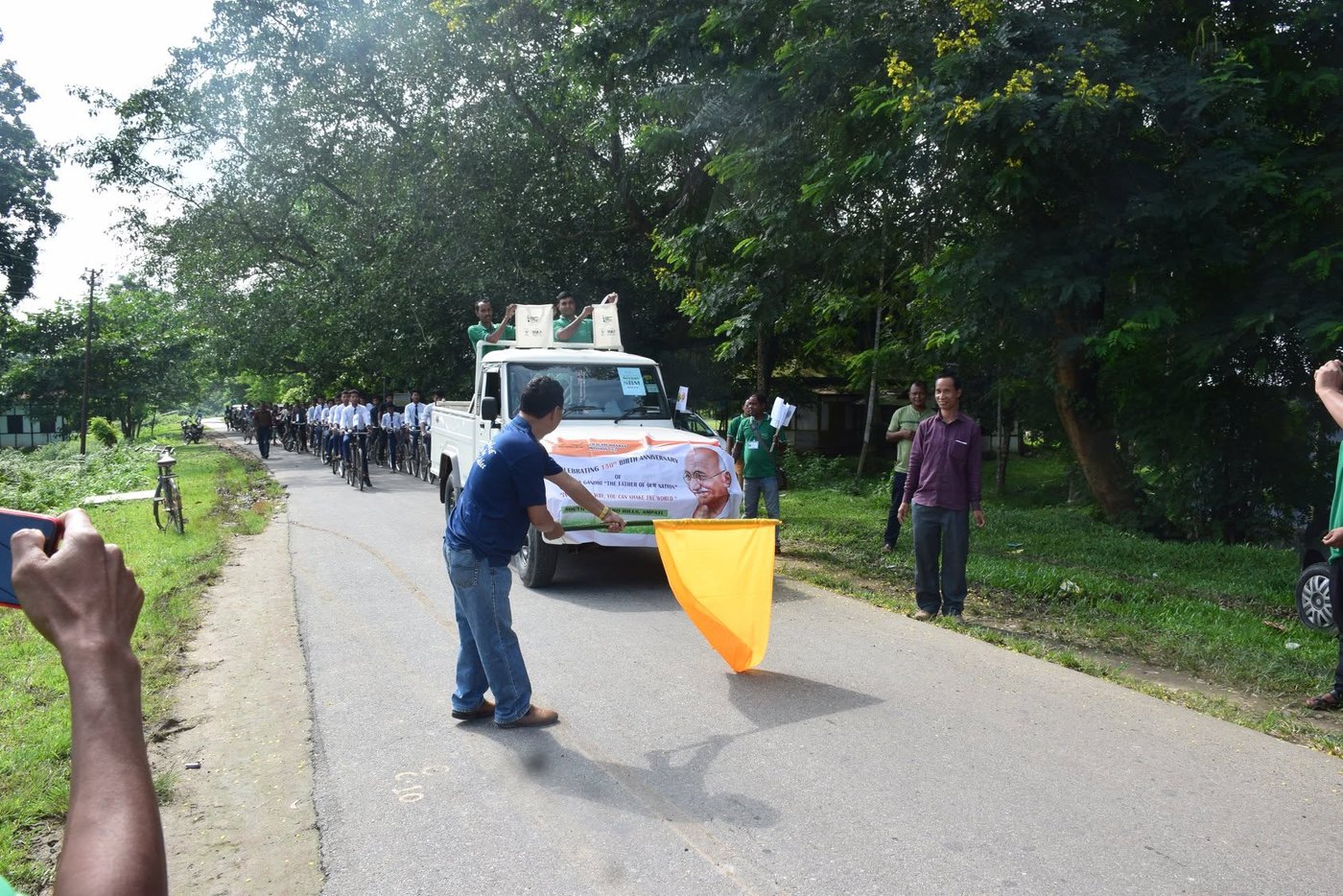
More than 50,000 reusable cloth bags have been produced in support of removing single use plastic bags and moving households and shops to reusable ones. 10,000 of them were supported by the Government of Meghalaya under the Chief Minister’s Plastic Challenge, sponsored by Max Cement and Star Cement.
SLRD led the project to set up a plastic waste recycling unit in South West Garo Hills in 2019. The unit is operated by a village committee. A recycling unit handles the plastic already in circulation. A cloth bag stops the next one entering.
- 50,000 and more bags produced
- 10,000 bags under the Chief Minister’s Plastic Challenge
- One recycling unit, operating since 2019
Mission Organic Meghalaya
Farmer training and organic input supply under the state organic mission, the largest single training programme delivered anywhere in the portfolio.
- 10,000 people trained
- Farmer training, organic input supply and produce value chain support
IVCEES, Integrated Value Chain Enhancement for Environmental Sustainability
A 36 month programme in Ri Bhoi with the UNDP GEF Small Grants Programme and TERI, working with Farmer Producer Organisations and rural communities to build a climate resilient agricultural value chain.
The work runs across climate resilient agriculture, crop diversification, FPO capacity building, nursery development, food processing, post harvest management, certification and advisory support, market and digital connectivity, water management and renewable energy integration.
- 1,200 farmers trained
- A turmeric processing plant commissioned, serving 1,800 farmers
- A 12 kW solar cold storage, solar water pumps and off-grid systems
- 300 trainees in the 2025 fisheries development programme
- Reviewed on site by a TERI and UNDP delegation, July 2026
Solar energy for producer cooperatives
Solar cold storage, solar water pumps and off-grid systems are in place across the Ri Bhoi cooperatives under the UNDP GEF Small Grants Programme. In June 2026 a solar installation at Madanheh village, Marngar, moved a farmer enterprise from traditional cultivation to solar powered processing, co-funded with SELCO Foundation.
Cold storage takes post harvest loss out of the fruit and vegetable chain at the point where the loss occurs, which is why the energy component sits inside the value chain programme rather than alongside.
Western Ri Bhoi value addition cluster
A farmer owned cluster built around the Western Ri-Bhoi Farmers Producer Cooperative Society at Patharkhmah, registered in 2020 with 525 members.
- Dehydration unit rated at 1,000 kg of fresh produce a day, giving around 150 kg of dried product
- Products covering pineapple, amla, bay leaf, lemongrass and medicinal and aromatic herbs, with an agreed buyback
- A one acre agroforestry nursery for around 150,000 seedlings a year, serving 1,500 to 1,800 farmers
- Planting material covering timber species, fruit plants, bamboo, aromatic plants and areca
No photograph Neither the nursery beds nor the dehydration unit has been photographed. The entry publishes without an image rather than borrowing one.
Jirang fisheries cluster
A hub and spoke model for the fish farmers of Jirang Block, developed with the Global Association of MSMEs and Living Roots Network, and prepared to the format of the Department of Fisheries, Government of Meghalaya.
The design argument is road hours to Guwahati rather than water area, so the investment goes into seed and live fish logistics rather than a small processing plant.
- 993 fish farmers
- 135 hectares of ponds
- Fingerling bank, solar supported feed mill, live fish holding and purging, live haul, cold chain and market connect
Enterprise finance and skills
In June 2026 the Global Association of MSMEs signed an agreement with Meghalaya Rural Bank to help self help groups, artisans and agricultural processors become bankable enterprises. Training alone does not move a producer into business. A bank willing to lend against a producer institution does.
SLRD leads a consortium applying for empanelment as a skilling partner with the Meghalaya State Skill Development Society, with self-employment as the declared outcome for every course.
Training delivered in Ri Bhoi
Fifteen dated programmes since July 2024, run with ICAR-KVK Umiam, ICAR-ATARI Zone VII, ICAR-NEH, the ICAR Agribusiness Incubation Centre and ATMA.
| Date | Programme | Where | Partner |
|---|---|---|---|
| Jul and Aug 2024 | Pineapple post harvest handling and profitability, from harvest to market | Ri Bhoi | ICAR-ATARI Zone VII and KVK Ri Bhoi |
| Sep 2024 | Millet post harvest technique and market potential | Ri Bhoi | ICAR-ATARI Zone VII |
| Nov to Dec 2024 | Awareness building and FPO orientation, climate resilient farming and gender participation | Ri Bhoi | SLRD |
| Jan 2025 | Vermicomposting technique and application | Ri Bhoi | ICAR |
| Mar 2025 | Climate smart farming and crop diversification, four days | Meghalaya | ICAR Agribusiness Incubation Centre |
| Mar 2025 | Produce aggregation | Marngar | Marngar Cluster FPMCS with ICAR-ATARI Zone VII |
| Apr 2025 | Permaculture, 32 farmers | Western Ri Bhoi | Western Ri-Bhoi FPCS |
| Apr 2025 | Permaculture, more than 30 farmers | Thad village | Thad Multipurpose Cooperative Society |
| Jul 2025 | Produce aggregation for farmers, SHGs and FPOs | Marngar | Marngar Cluster FPMCS |
| Jul 2025 | Practical permaculture, two days, 27 farmers | Thad village | With ATMA |
| Jul 2025 | Practical permaculture, two days | Mynnar village | Western Ri-Bhoi FPCS with ATMA |
| Aug 2025 | Crop diversification and integrated farming systems, four days | Umiam | ICAR-KVK Umiam |
| Sep 2025 | Vermicompost for women farmers, two workshops | Umiam | ICAR-NEH |
| 2025 | Fisheries development, improved practices and value addition, 300 trainees | Ri Bhoi | SLRD |
| Jul 2026 | MSME ecosystem, World Youth Skills Day | Madanheh village | Marngar Cluster FPMCS with Global Association of MSMEs |
Assam
Six districts. Three integrated clusters, a two district fisheries programme and the regional office.
Groundwork through 2025 and 2026 has run through the farmer institutions themselves rather than around them. The sequence below is how a cluster gets built, and publishing the sequence tells a department more than describing the finished plant would.
Where we work in Assam
| Area | District | Institution or partner | What is happening there | Status |
|---|---|---|---|---|
| Donkamokam | West Karbi Anglong | Jirjar Farmer Producer Company Limited | Integrated biochar, biofertiliser and essential oil unit. General body meetings and village profile surveys on converting barren land. 250 acres of aromatic cultivation and 500 acres of bamboo planned. | Under setup |
| Mahur and Jatinga Valley | Dima Hasao | Jatinga Valley Farmer Producer Company Limited | Twenty year agreement signed with SLRD. Integrated unit with climate smart agriculture, agroforestry, watershed treatment, nursery and ecological restoration. | In development |
| Haflong | Dima Hasao | District administration and YesEarth | Meeting with the Deputy Commissioner on the aromatic crop initiative. Launch of the climate mitigation and energy literacy initiative by two state ministers. | Continuing |
| Majbhat and Dhanshreeghat villages | Udalguri | Thalua Krishi Banijya O Shram Niyog Bahumukhi Samabai Samiti Limited | Farmer sensitisation, board meeting, village profile survey and technical site verification. Bamboo to biochar to biofertiliser, and lemongrass and citronella to essential oils. | Under setup |
| Hajo, Rangia, Bezera, Sualkuchi, Boko and other blocks | Kamrup Rural | Global Association of MSMEs, SLRD and Living Roots Network under NEER | The market district. Fingerling bank, ice and cold chain, live haul, solar hybrid feed mill, post harvest handling, FFPO formation and a quality lab. | In development |
| Balijana, Matia, Rongjuli, Lakhipur and other blocks | Goalpara | Global Association of MSMEs, SLRD and Living Roots Network under NEER | The resource district. Beel based culture fisheries, flood resilient ponds, a mola and small indigenous species hatchery, community fingerling banks and beel cooperative reform. | In development |
| Six Mile, VIP Road | Kamrup Metro, Guwahati | SLRD | North East India regional headquarters, supporting work across all eight states. | Operational |
How the Assam clusters were built, month by month
Six steps between May and August 2026, each recorded in Action Updates.
- May 2026. General body meeting with the Board of Directors and farmers of Jirjar FPC at Donkamokam, followed by village profile surveys.
- May 2026. Board meeting at Dhanshreeghat and farmer sensitisation at Majbhat with the Thalua Cooperative Society, built as open discussion rather than briefing.
- May 2026. Meeting with the Agriculture Production Commissioner, Government of Assam, on an integrated agroforestry and rural livelihood initiative covering five integrated units.
- June 2026. Technical site verification at Majbhat, assessing soil, available agricultural area and siting of plantations and processing units.
- August 2026. Introductory meeting with the Deputy Commissioner, Dima Hasao, at Haflong.
- August 2026. Board meeting at Mahur and signature of a twenty year agreement between Jatinga Valley FPC and SLRD.
The three integrated clusters
Each cluster processes plantation and residue biomass into biochar, converts biochar into soil inputs, and distils aromatic grasses into essential oil. Each is planned with 250 acres of aromatic cultivation and 500 acres of bamboo around the site, plus a block of degraded land taken up for restoration.
SLRD and its technical partners hold long term agreements with the partner institutions covering implementation, operations support, statutory compliance, technical support and market connect, with performance monitored on a digital platform.
- Jirjar FPC, West Karbi Anglong. DPR completed, financing under way
- Jatinga Valley FPC, Dima Hasao. 1,000 households directly and around 5,000 indirectly
- Thalua Cooperative Society, Udalguri. Baseline data, cooperative integration, land selection and feedstock assessment completed in FY 2025 to 26
Aromatic herbs and bamboo
Lemongrass and Java citronella grow at all three Assam sites and at Mokokchung in Nagaland. Variety selection follows regional research rather than general recommendation. The lemongrass variety is Jor Lab L-8, developed by CSIR-NEIST for North East conditions. The citronella variety is Bio 13, with Jorhat C2 and Java C5 as alternates. Variety and agronomy work continues with CSIR-CIMAP.
Cultivation is organic. No chemical fertiliser, weedicide or synthetic input is used. Farmyard manure and vermicompost carry the nutrition, and biochar based biofertiliser from the unit returns to the same fields. Farmers are paid a procurement price per kilogram of harvested herbage, and the unit produces the oil.
Bamboo plantation covers 500 acres at each of four locations. Land targeted is empty patches around villages, spare farm land, community hill areas and degraded slopes.
- 750 acres of aromatic cultivation planned across the three Assam sites
- 2,000 acres of bamboo across four locations
- Site elevations from 85 metres at Udalguri to 650 metres in Dima Hasao, so agronomy is set separately for each site
Fisheries in Kamrup Rural and Goalpara
A two district programme under NEER, the North East fisheries programme led by the Global Association of MSMEs with SLRD and Living Roots Network. Kamrup Rural is the market district and Goalpara the resource district.
Existing fish feed units are audited and brought back into production rather than replaced with new construction. Fingerling supply, ice and live fish transport are the first fix, because irregular supply and heat loss cost the farmer more than yield does.
- 2,100 farmers targeted
- 1,000 hectares of ponds and 287 hectares of beels
- 6 FFPOs
- Pond productivity moving from a 1.68 tonne per hectare baseline towards 2.45 tonnes in year one
- Two entrepreneur owned retail outlets with a daily board showing pond of origin and harvest date
No photograph No photograph from either district. The entry publishes without an image rather than using a fisheries stock photograph.
Government and institutional engagement
An agreement with the Assam Science Technology and Environment Council on climate resilience and innovation, March 2025. The North East Sustainable Business and Entrepreneurship Conclave at Guwahati with the Pollution Control Board, Assam, June 2024. The Farm Tiger range of biopesticides and biofertilisers, developed for North East conditions with Assam Agricultural University Jorhat and ICAR-NEH, launched by the Union Minister of Agriculture.
Nagaland
| Area | District | Institution or partner | What is happening there | Status |
|---|---|---|---|---|
| Ungma village | Mokokchung | Nagaland Agri Alliance FPC, formed by SLRD, hosted by Ngaza Agro and Forestry | Integrated unit around bamboo and aromatic crops, with biochar, biofertiliser, aromatic cultivation and oil extraction. 250 acres of aromatic cultivation and 500 acres of bamboo planned. Elevation 1,000 to 1,450 metres, the highest of the four aromatic sites. | Preparatory |
| District wide | Mokokchung | YesEarth Eco Consulting | Biochar carbon removal project, with a project design document prepared to an international biochar methodology. | In development |
| Kohima | Kohima | YesEarth Eco Consulting as lead implementing agency | Net Zero and Zero Waste Nagaland Legislative Assembly. Renewable energy, waste to value systems, real time monitoring dashboards and carbon neutrality measures for the legislative complex. | Under implementation |
| Statewide | Multiple | SLRD and YesEarth | Partnership engagements on climate resilience and sustainable development, June 2025. | Continuing |
Note The Nagaland climate resilience engagement photograph is used for this section. The generated FPC member image is not published, being labelled a photograph but generated.
Programmes across the region
- NEER, the North East Enterprise and Resource Network for fisheries. A North East programme, phased across all eight states of the region and not extended beyond them. Four pillars of market access, training and skills, enterprise development, and quality and compliance. Live work today is the Jirang cluster and the two district Assam programme. Tripura, Manipur, Sikkim, Arunachal Pradesh and Mizoram sit in later cycles and carry no field activity yet.
- Krishi Udyam Setu. Buyers post structured requirements first, farmer enterprises prepare against them through readiness clinics, and a buyer Sangam closes the deals.
- Shilp Udyam Setu. The handicraft and handloom version, connecting artisan clusters to design, branding, packaging, finance and buyers through young enterprise teams.
- Training and skills. A fisheries and aquaculture programme of 22 modules, each offered as a half day awareness session, a three day short course or a fifteen day certificate course, alongside 21 short workshops on soil and bio-inputs, cultivation and nursery practice, enterprise and institution building, and climate and carbon awareness.
- YesEarth Youth Corps. More than 3,000 students reached across the climate literacy and Climate Clock programmes, with the National Cadet Corps as a partner.