8–9 September 2026 | Seminar Hall, Department of Geography, Gauhati University
How can indigenous knowledge, grassroots innovation and clean energy contribute to stronger solutions for biodiversity, climate resilience and land restoration?
This question shaped the National Conference on Indigenous Traditional Knowledge, Clean Energy & Grassroots Innovation to Policy Solutions for Biodiversity, Climate Resilience and Land Restoration in Assam & Meghalaya, held on 8–9 September 2026 at Gauhati University.
Jointly convened by the Tata Institute of Social Sciences (TISS), Guwahati Campus, and The Energy and Resources Institute (TERI) under the GEF Small Grants Programme (SGP), the two-day conference brought together policymakers, academics, technical experts and grassroots practitioners.
The conference focused on showcasing results and best practices from grassroots initiatives supported under SGP-OP7, exploring the integration of Indigenous Traditional Knowledge (ITK) with green and renewable technologies, and examining institutional and financial mechanisms that can strengthen small grants programming in the region.

From Knowledge to Innovation
The inaugural session featured Prof. Jagannath Ambagudia, Dr. Keshav Kumar, IPS (Retd.), Dr. Ratul Mahanta, Dr. Dipankar Saharia and Mr. Manish Kumar Pandey. The session highlighted the achievements of SGP-OP7 and the successful completion of the project in collaboration with 22 NGOs across Assam and Meghalaya.
Day 1 featured two key panel discussions on Indigenous Traditional Knowledge & Green Solutions and Appropriate Technology and Renewable Innovation, bringing together experts from TISS, TERI, TDU, Cotton University, IIT Guwahati, SELCO Foundation, Sauramandala Foundation and Mahabahu Climate Forum.
Day 2 expanded the conversation towards project outcomes, institutional mechanisms, financing, scientific validation and policy. The programme featured special remarks by Dr. Dipankar Saharia, a keynote address by Dr. Nani Gopal Mahanta, Vice Chancellor, Gauhati University, and an address by Mr. John Borgoyary, Regional Head North East India, UNDP.
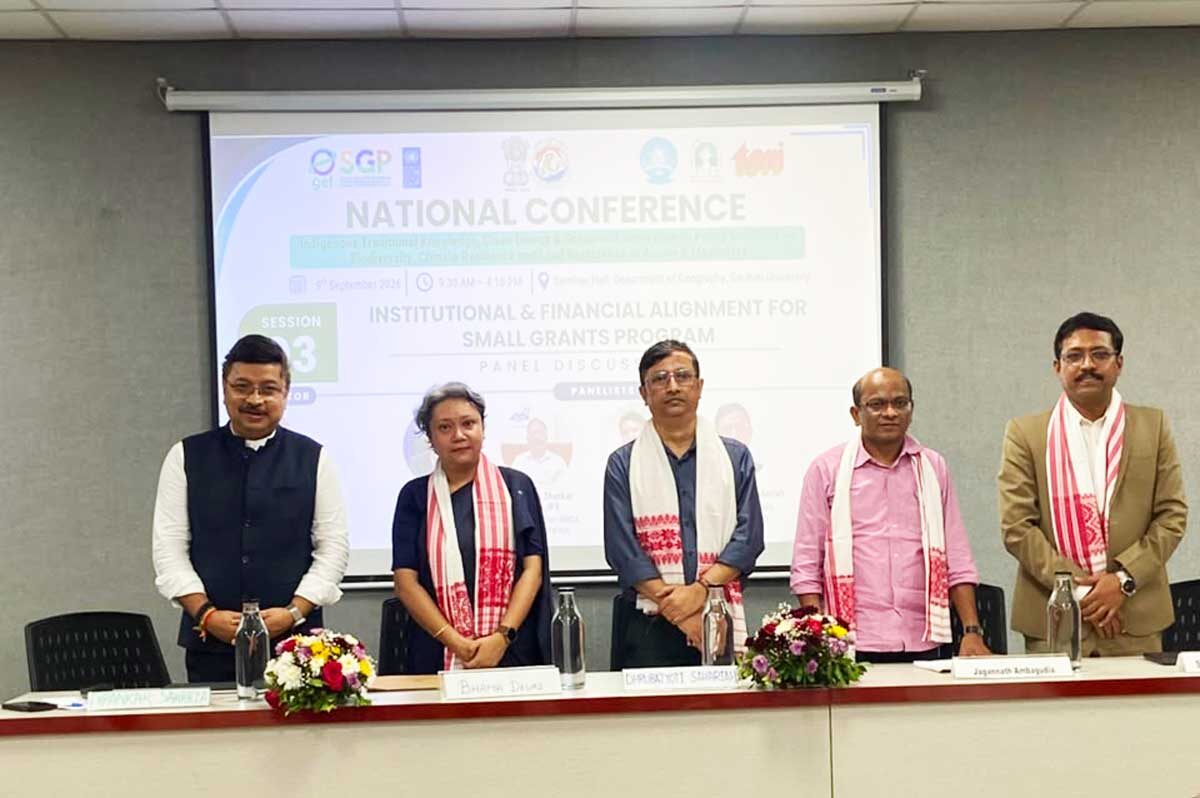
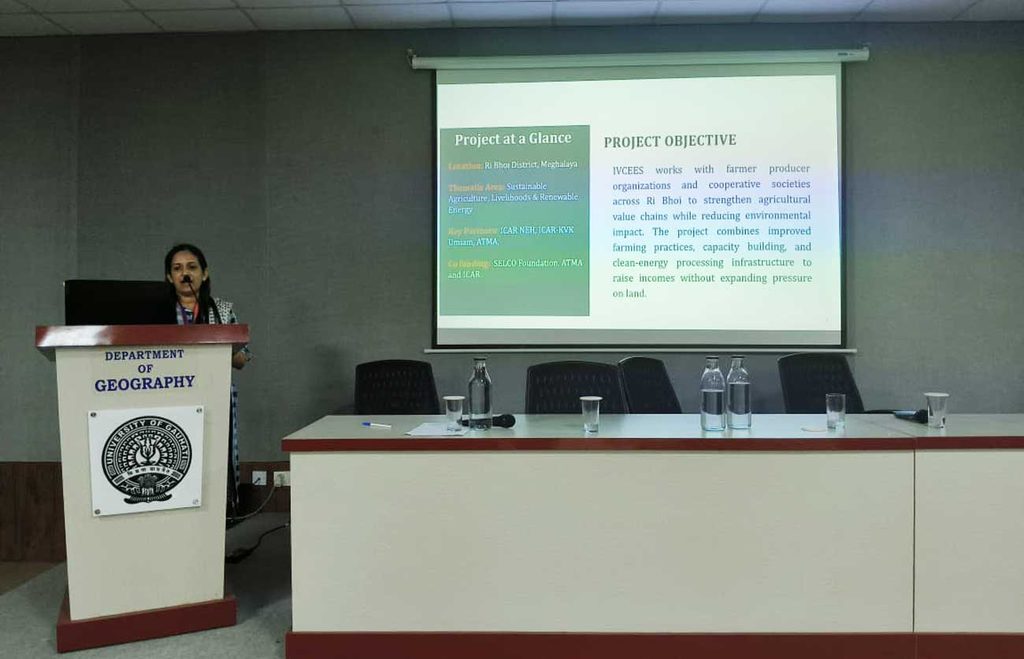
A dedicated Result Sharing Session gave selected NGO partners an opportunity to present outcomes and best practices from their SGP-OP7 projects. This was followed by thematic discussions on Institutional and Financial Alignment for the Small Grants Programme and Scientific Validation and Policy (GENERATE).
The conference was also graced by Dr. Vibha Dhawan, Director General, TERI, whose special remarks emphasised conserving Indigenous and Traditional Knowledge, promoting green and sustainable solutions in response to a changing climate, and creating sustainable livelihood opportunities for local communities.
Building Pathways for Policy Action
With participation from Gauhati University, IIT Guwahati, Cotton University, TERI, TISS, UNDP, NABARD, government departments, civil society and NGO partners, the conference created a strong cross-sector platform for dialogue.
From indigenous knowledge and grassroots innovation to clean energy, appropriate technology, institutional financing and scientific validation, the discussions connected different parts of the policy chain.
The conference concluded with a Valedictory Session, reinforcing the need to translate grassroots successes into broader and sustainable policy action for biodiversity conservation, climate resilience and land restoration across Assam, Meghalaya and the wider Northeastern region.