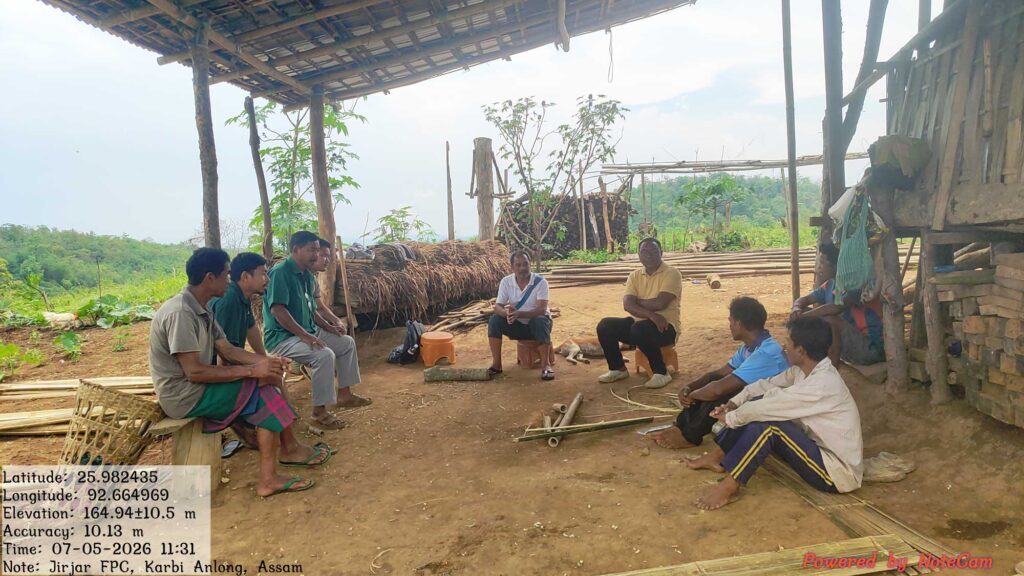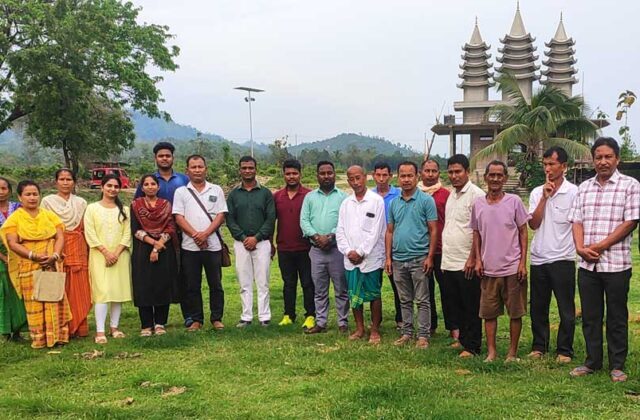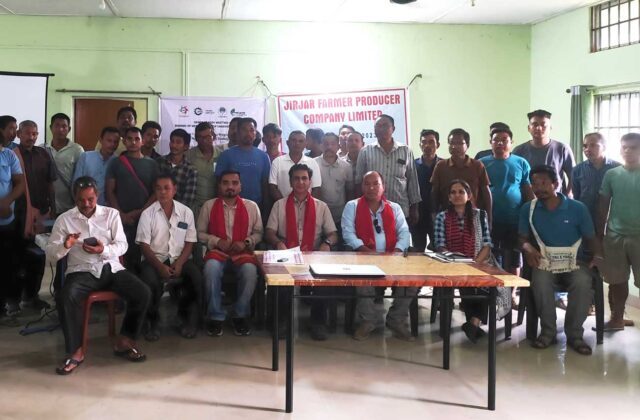
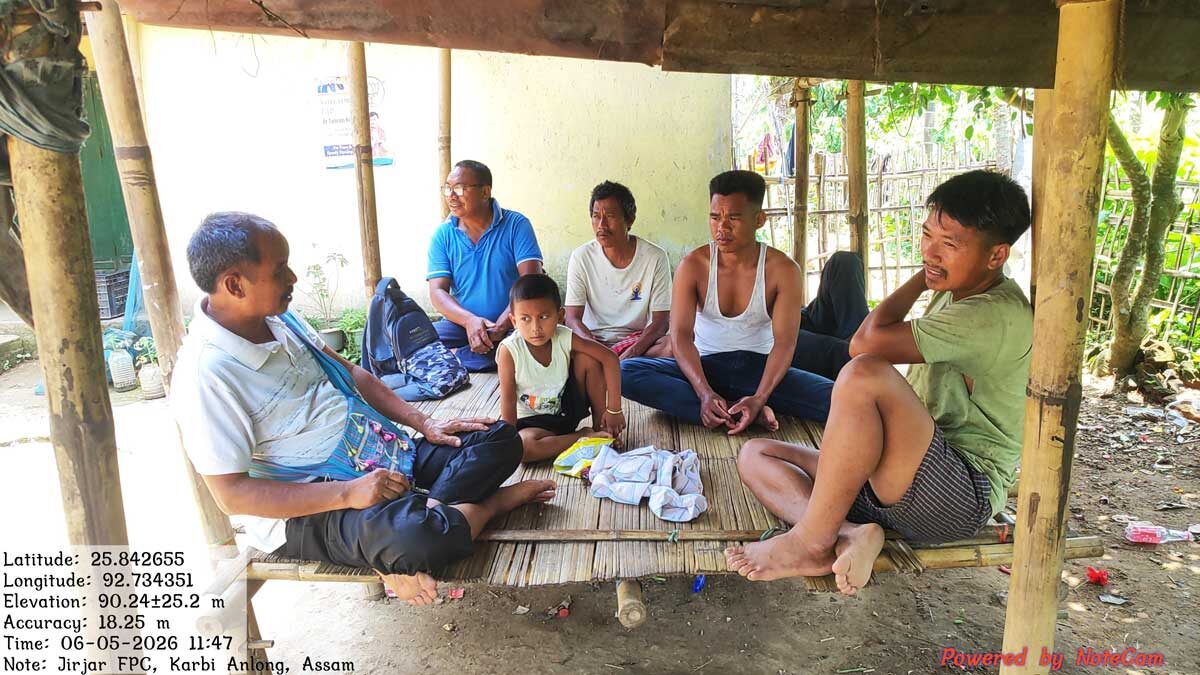
Donkamokam, West Karbi Anglong — In the villages of West Karbi Anglong, conversations around farming are taking a fresh turn. Across communities, farmers are coming together to explore a simple but promising question: What if land that has long been considered barren could become a source of income?
Field-level discussions and village profile surveys are currently underway with farmer members across the region. At the heart of these conversations is the introduction of high-value aromatic crops—crops that are well suited to Assam’s agro-climatic conditions and offer an opportunity to make better use of land that has traditionally remained underutilised.
From “Barren” to “Worth Growing”
For many communities, undulating, degraded and previously uncultivable lands have not been seen as particularly productive. The initiative is opening up a different perspective.
Farmers are being introduced to aromatic crops that can perform well in challenging growing conditions, require relatively low inputs and are naturally more resilient to wildlife grazing than many conventional crops.
The idea is simple: land does not always have to be perfect to be productive.
Through village meetings and focused group discussions, farmers are getting a closer look at how these crops can fit into their existing landscapes and livelihoods. The conversations cover everything from cultivation practices and crop management to harvesting, market linkages and income opportunities.
More Than Cultivation: Building a Complete Livelihood Pathway
The initiative goes beyond simply encouraging farmers to grow a new crop. Communities are being familiarised with an end-to-end package of practices, helping them understand what it takes to cultivate, manage and eventually market aromatic crops successfully.
A key part of the model is the assured buy-back mechanism, giving farmers greater clarity about where their produce can go after harvest. This creates a direct connection between the field and the market—helping transform cultivation from an isolated activity into a more predictable livelihood opportunity.
At the community level, these discussions are also creating space for farmers to share their experiences, concerns and local knowledge. Their participation remains central to understanding how the model can work within the realities of each village.
Growing Opportunity, One Community at a Time
By bringing idle and underutilised land back into productive use, the initiative is looking beyond individual crops. It is working towards creating green, productive community assets that can support rural households over the long term.
For West Karbi Anglong, the opportunity lies not just in what can be grown on the land—but in what that land can do for the community.
With farmers, local knowledge and market linkages coming together, previously overlooked landscapes are being reimagined as spaces for cultivation, enterprise and sustainable livelihoods.