Turning an idea into a sustainable livelihood opportunity takes more than a good business model. It requires local knowledge, institutional support, and conversations with the people who understand the region best.
As part of our ongoing efforts to design and roll out a sustainable, FPC-collaborative aromatic crop initiative in Dima Hasao, our team recently held a series of consultations with key district stakeholders.
The discussions brought together perspectives from the district administration, agricultural science, and rural finance, helping us better understand the opportunities and considerations involved in taking the initiative forward.
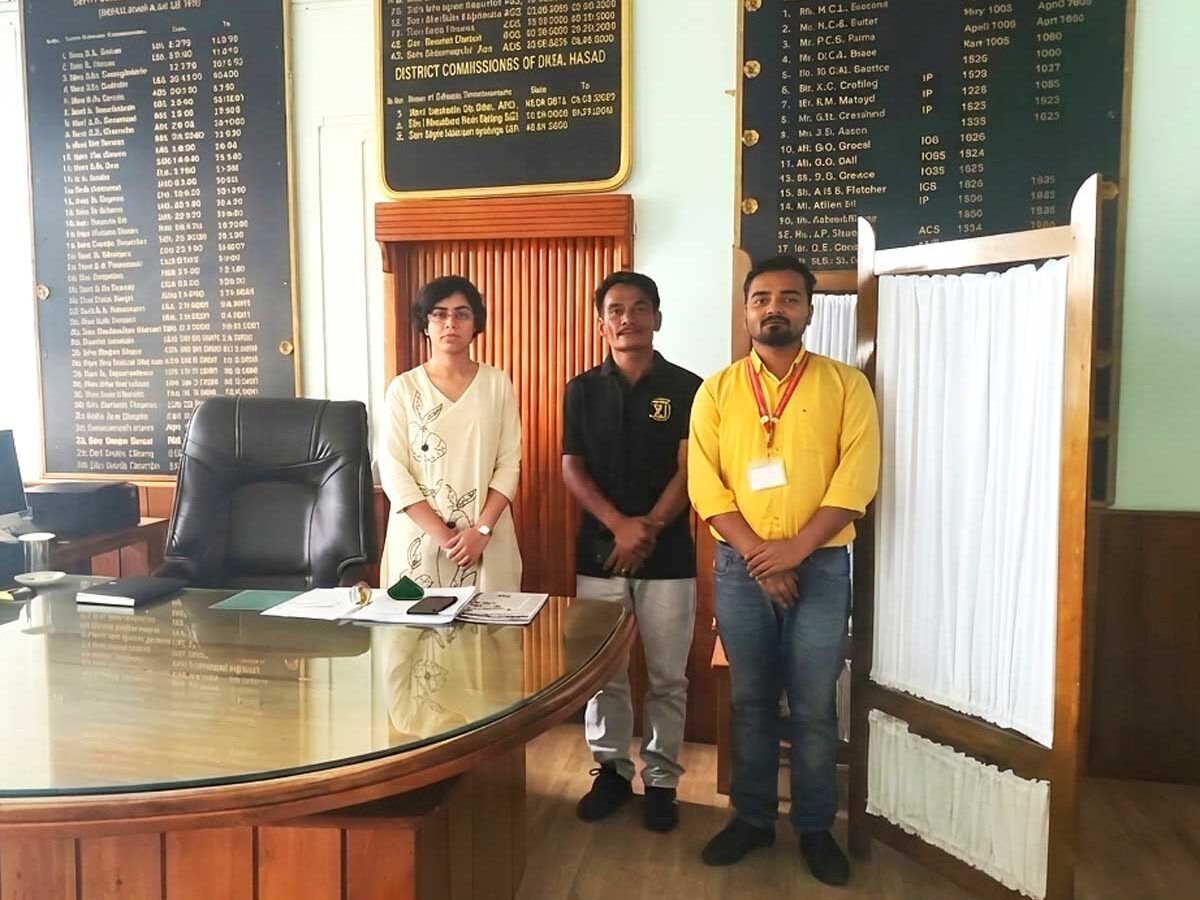
Engaging the District Administration
Our first meeting was with Smt. Gayatri Devidas Hyalinge, IAS, Deputy Commissioner of Dima Hasao.
The team introduced the FPC-collaborative business model and shared the plans for aromatic crop cultivation and processing in the district.
The response was particularly encouraging. The Deputy Commissioner was already familiar with the partner Farmer Producer Company (FPC) and its CEO. Based on her previous experience with the FPC, she responded positively to the proposed aromatic crop initiative and assured the full support of the District Administration as the project moves ahead.

Bringing Agricultural Science into the Conversation
The next consultation was with Mr. Ardhendu Chakraborty, Senior Scientist at the Krishi Vigyan Kendra (KVK), Dima Hasao.
The discussion focused on the agronomic aspects of the proposed model, particularly the viability of lemongrass and citronella cultivation in Assam. The team also discussed relevant experiences and lessons from the national Aroma Mission.
Mr. Chakraborty highlighted the potential of the initiative in the context of the challenges currently faced by farmers in the region. Traditional crops such as ginger and turmeric often provide farmers with sub-optimal prices, making value-added aromatic crops a potentially useful alternative.
At the same time, he emphasised that introducing a new crop will require strong community mobilisation to encourage farmer participation and support adoption.

Engaging with NABARD
The team’s final consultation was with Mr. Amarjit Singh, District Development Manager, NABARD.
The discussion centred on the project’s farmer engagement strategy and the steps required to move the initiative forward.
Mr. Amarjit also emphasised the importance of strong community mobilisation and careful planning. He further offered his support in navigating the project’s next steps as the initiative progresses.
Looking Ahead
Together, these consultations provided valuable perspectives from three important areas: district administration, agricultural science, and rural finance.
Each discussion helped strengthen the approach to developing an aromatic crop initiative that is aligned with local conditions and farmer needs.
We are grateful to Smt. Gayatri Devidas Hyalinge, IAS, Mr. Ardhendu Chakraborty, and Mr. Amarjit Singh for their time, encouragement, insights, and support.
The next step is to build on these conversations and partnerships as the initiative moves from planning towards implementation, with the aim of creating sustainable livelihood opportunities for farmers in Dima Hasao.